Using technology not only to close read, but to invite our kids into a new environment where they are in charge.
Find ways to leverage technology to personalize learning.
We need to teach our kids to be device agnostic. We need to know how to move between the tools we have. It's all about the thinking--the tool/device doesn't matter.
What are we doing here? Active Literacy!
Reading
Writing
Drawing
Viewing
Talking
Listening
Investigating
Choice Words by Peter H. Johnston Link: http://amzn.com/1571103899
We need kids to have a mindset of agency.
Interaction:
Teacher to student
Student to student
Student with text, resources, and tech
We must transform the way students read, write, access, collaborate, and share learning.
Flexibility piece is huge! Explicitly teach one tool over another. You might use a post-it note to anchor it in the text. You might use an iPad to archive the thinking.
Students annotate their thinking and create mental images during an interactive read aloud.
Student reflection videos to document new learning and questions. Think "confessional booth" from reality TV. Kids talk to the camera about their reading, sharing thinking around something such as questioning.
Cool strategy: Have kid who is a reluctant writer watch their video as many times as they'd like, then write two of their ideas down.
This kid in her class did this, then wrote his two sentences, took a picture and posted it to his blog, and other kids started commenting on it.
She has her kids send all of their work as email to a class gmail. She has kids write their name as the subject line.
Book trailers: Think about mood, music, look at mentor text examples
Classroom Twitter:
Sharing what is being done in the classroom
"The World is Watching." We are teaching people.
Working on problems with classes around the world.
Ex: Kids writes a letter on paper to Seymour Simon. They take a picture and tweet Seymour. He replies.
Build the idea of network. Who is in your network?
Transliteracy
The ability to read, write and interact across a range of platforms, tools and media, from signing and orality through handwriting, print, TV, radio and film, to digital social networks.
It's not about technology. It's about creating:
authors
creators
collaborator
producers
bloggers
experts
"Children grow into the intellectual life around them." -Vygotske
Technology is always new and always changing. It's important for us to take time to share with each other.
What are digital texts?
Moving media
Clips of TV, movies, video
Any tech that displays these organizing structures:
Story Line
Boxes and Bullets
Why digital texts?
Digital texts can support...
Engagement
Teaching reading skills and strategies
Lifting the level of talk
Note-taking
Possible methods for using digital texts
We can use DT to...
Connect and engage readers to a teaching point (Use a DT during the connection)
Ex: Using clip from The Simpsons before a lesson on envisioning or idioms
Illustrate an example of a reading skill
Illustrate a metaphor for a reading skill or habit
Teach content
Use as a vehicle for learning another way
TP: Sometimes texts are just begging us to stop and predict. When readers come to a pivotal part of our book, we pause and think: "Uh oh, what's going to happen next? Perhaps it could be..."
Stop at 1:20 : What is going to happen next?
TP: What someone does and how he/she acts can be windows into that person. Readers pay close attention to a character's actions and think: "This character is the kind of person who..."
While watching, stop and jot what things this character is doing. What does this say?
(Stop several times throughout for partners to share evidence and theories)
TP: Sometimes readers think thematically. We can do this as we read by paying attention to a character's problems and asking ourselves, "What is this character learning about life?"
Show of the few clips. What evidence do you see and what does it make you think?
TP: Nonfiction readers don't just find main ideas in a text. We grow our own ideas while we read. To do this, we can pause when we learn something big and important and say, "This makes me think..." or "This is important because..."
Show the first 1:42 What are you thinking right now?
TP: When we read nonfiction texts, we become an expert on a topic. Nonfiction experts teach other what we know, using our hands, fancy words, and explaining voice.
After watching this clip, turn and teach your partner what you've learned.
Important Reading Skills to Teach Into
Literature
Grow ideas about characters
Supporting thinking with text evidence
Interpreting themes
Informational Text
Determining central idea and supporting details
Analyzing the relationship between authorial intent and craft
Supporting thinking with text evidence
Where can we incorporate Digital Texts and Literacies?
In reading workshop:
In the Connection to engage readers
In the Teaching to demonstrate a strategy
In the Active Engagement to practice the strategy together
What does close reading look like at different levels that also helps kids to fall in love with reading?
Think: What does it make you think and feel?
Methods for raising levels about text-based conversation.
Questions to think about:
How can we teach students to see more in the texts they encounter?
How can we innovate so that this teaching is engaging, intellectual, and joyful?
What methods increase transference?
What kinds of texts might we incorporate?
You get out of reading what you bring to it. Ex: Mary was completely bored at the baseball game because she doesn't know how to read a baseball game.
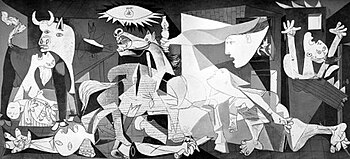
Guernica by Picasso
1. Notice what there is to be noticed. What do you see? Look at the characters. Name out what you notice about each character. 2. Look across the whole sense and try to make sense of it
Develop an idea, then try to support it with evidence from the text
"Point to the part of your story where that happens." 3. What is it starting to be about?
Develop an idea about the whole text, supporting with text evidence Ex: Maybe it is showing that war destroys people. Also, it might be about...
"Wings" by Macklemore
Read lyrics with a partner and retell what it is about.
Before we listen to the song, make a plan for what you might listen to.
Some Technical Vocabulary for Things You Might Notice...
Music
Text
verse
chorus
pitch
movement
theme
vocals, piano, percussion
temp
dynamics
stanzas
imagery
symbolism
repetition
perspective
theme
tone
structure
Listen and take notes:
MY NOTES: symbolism: flying so high (Jumping for net/getting out of bad situation)
Stopped after a minute, and had us turn and talk
As we finish listening, mark off places where the tone changes.
Going back to the poem, when does the author shift tones? How does that effect meaning?
Using Digital Bins to Teach Text Evidence, Mood, Multiple Perspectives, Symbolism, and Theme
[Notes from a session with Sonja Cherry-Paul & Dana Johansen]
Authors of Take it to the Text and Talk Back
What are Digital Bins?
A "bin" is a "living folder" filled with links and documents
Links connect to...
YouTube.com
photographs
videos
music
primary source documents
advertisements, etc.
When to Use Digital Bins?
Reading Units:
Historical Fiction
Realistic Fiction
Nonfiction
Poetry, etc...
Constructing Interpretations About:
Figurative Language
Mood, Tone, & Atmosphere
Multiplie Perspectives
Symbolism
Theme, etc..
Sample Digital Bin: Mood
Folders: Pictures, Video Clips, Music
Files: Mood/Atmosphere Word List.doc, Guiding Questions.doc
Access:
Think about flash drives as a digital bin. Kids can come get the bin.
Think about Google Drive bins.
Think about just letting bins live on your classroom computers.
Interpreting the Mood
Using a digital text:
What do you see? Be detailed and descriptive.
What do you think is happening?
What are your initial reactions?
Why do you feel this way?
What questions do you have?
What might be the purpose of this text?
What do you see?
I see a crowd of fans cheering, maybe after a win. They are all wearing red-possibly their team's color. They are coming together at a sporting event.
What do you think is happening?
I think they are celebrating a win.
What are your initial reactions?
They seem very happy.
Why do you feel this way?
I can't really see their faces in detail, but their hands are raised in a way I've seen before at sporting events.
What questions do you have?
What are they doing with their hands?
What might be the purpose of this text?
To illustrate a report of a sporting event
How might you describe the mood of the text?
Jovial
Types of Text Evidence
Clues about the mood?
facial expressions
gestures/actions
posture
lighting colors
setting description
Helpful to provide students with a Mood Word List (sorted by positive and negative)
Mood Bin: Video Clip (Mulan)
Text Evidence:
Characters' Actions
Weather
Setting
Lighting Time of Day
Characters' Emotions
Mood Bin: Song Lyrics
"Touch the Sky" by Julie Fowlis
When the cold wind is calling
And the sky is clear and bright
Misty mountains sing and beckon,
"Lead me out into the light"
I will ride, I will fly
Chase the wind and touch the sky
I will fly
Chase the wind and touch the sky
Where dark woods hide secrets
And mountains are fierce and bold
Deep waters hold reflections
Of times lost long ago
I will hear their every story
Take hold of my own dream
Be as strong as the seas are stormy
And proud as an eagle's scream
I will ride, I will fly
Chase the wind and touch the sky
I will fly
Chase the wind and touch the sky
And touch the sky
Chase the wind, chase the wind
Touch the sky
Text Evidence:
characters' actions
chocies/decisions
figurative language
setting
weather
lighting/time of day
Mood Bin: Novel
Multiple Perspectives Sample Digital Bin
Guiding Questions: -What/Who do you see?
-What do you think is happening?
-What are your initial reactions? -Why do you feel this way? -What questions do you have? -What might be the purpose of this text? -Describe the different perspectives in this text.
Theme Sample Digital Bin
Think about a birthday party. Often they have a theme.
*A thread that runs through a text and provokes an emotional response in the reader.
Photos by Louis Hine
Lewis Hine
Photographer
Lewis Wickes Hine was an American sociologist and photographer. Hine used his camera as a tool for social reform. His photographs were instrumental in changing the child labor laws in the United States.Wikipedia
Push kids to increase the sophistication of identified theme. They can't ALL be about friendship.
Text Evidence: Looking for patterns in...
Actions
Thoughts, Decisions, realizations
lessons learned
obstacles
turning points
changes from the beginning to the end
triumphs
symbolism
multiple perspectives


.JPG)

.JPG)

.JPG)


.JPG)